
90% of security breaches aren’t targeted operations. They are automated door-knocking that fails against proper brute force protection.
It is 3:00 AM. You are asleep. Your infrastructure, however, is currently having a conversation with a server in a basement halfway across the world.
It looks like this: SSH login: admin | Pass: 123456 POST /login | User: administrator | Pass: password SIP Registration | User: 100 | Pass: 1234
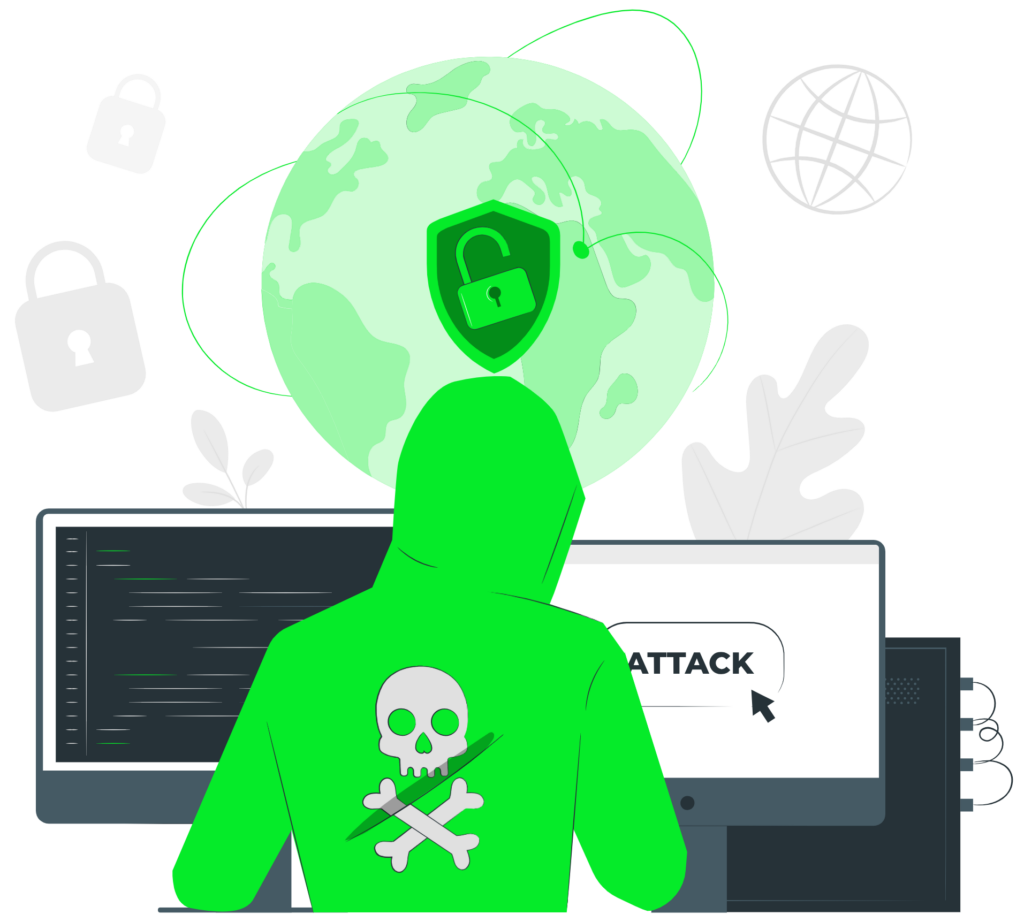
This isn’t a hacker in a hoodie typing furiously. It is a script. And if your username is “admin” or “root,” you have already done half the work for them.
At Carl’s Consulting Agency, we see millions of these requests across our network every week—targeting everything from email servers to phone systems. Here is the anatomy of a brute-force attack, and why we engineer our infrastructure to stop it before it even touches the data.
The "Admin" Mistake
In security, authentication requires two keys: a Username and a Password.
If you leave your username as the default admin, root, or administrator, you have handed the attacker 50% of the credentials they need to break in. Now, they don’t need to guess who you are; they only need to guess your password.
Mathematical probability is not on your side. With the username known, a modern botnet can test thousands of password combinations per minute against your server. Eventually, they will get lucky.
The Fix: Brute Force Protection via Defense in Depth
We don’t rely on one single lock to protect client infrastructure. We use a strategy called Defense in Depth—multiple layers of security that make it mathematically too expensive for a hacker to bother with you.
Here is how we lock down the perimeter:
1. Kill the Defaults
This is step one for every system we deploy, whether it’s a server or a phone system. We disable the default admin or root accounts and replace them with specific, unique IDs (like cca_ops or sys_82).
- The Result: When the bot tries to log in as “admin,” the door doesn’t just stay locked; the door doesn’t exist. The attack fails immediately because the user is invalid.
2. Move the Front Door (Port & URL Hygiene)
Critics say “Security by Obscurity” isn’t real security. We disagree—it is an excellent noise filter. Bots are lazy. They scan standard ports (Port 22 for SSH, Port 5060 for VoIP). By moving these services to custom, non-standard ports or putting them behind a VPN, we vanish from the general radar.
The Result: The bots knock on an empty door. They can’t pick a lock they can’t find.
3. The Bouncer (Fail2Ban & IPS)
Even with a hidden door, a persistent attacker might find it. That is why we deploy Intrusion Prevention Systems (IPS) like Fail2Ban at the network level. This software watches our server logs in real-time. If an IP address fails to log in 3 times in a row, the firewall slams shut. We don’t just show them an error message; we block their IP address from communicating with our network entirely.
The Bottom Line
Your infrastructure is a business asset, not a toy. If you are still logging into your router, server, or portal as “admin,” you are playing Russian Roulette with your business continuity.
Stop making it easy for them.
Security isn’t a feature; it’s a discipline. Move your infrastructure to Carl’s Consulting Agency, where we handle the heavy lifting of server security, updates, and active monitoring for you.